The Truth About Cooking Oils: Which Ones to Use and Why
Stop stressing about every oil on the internet. Here’s the practical, realistic version.
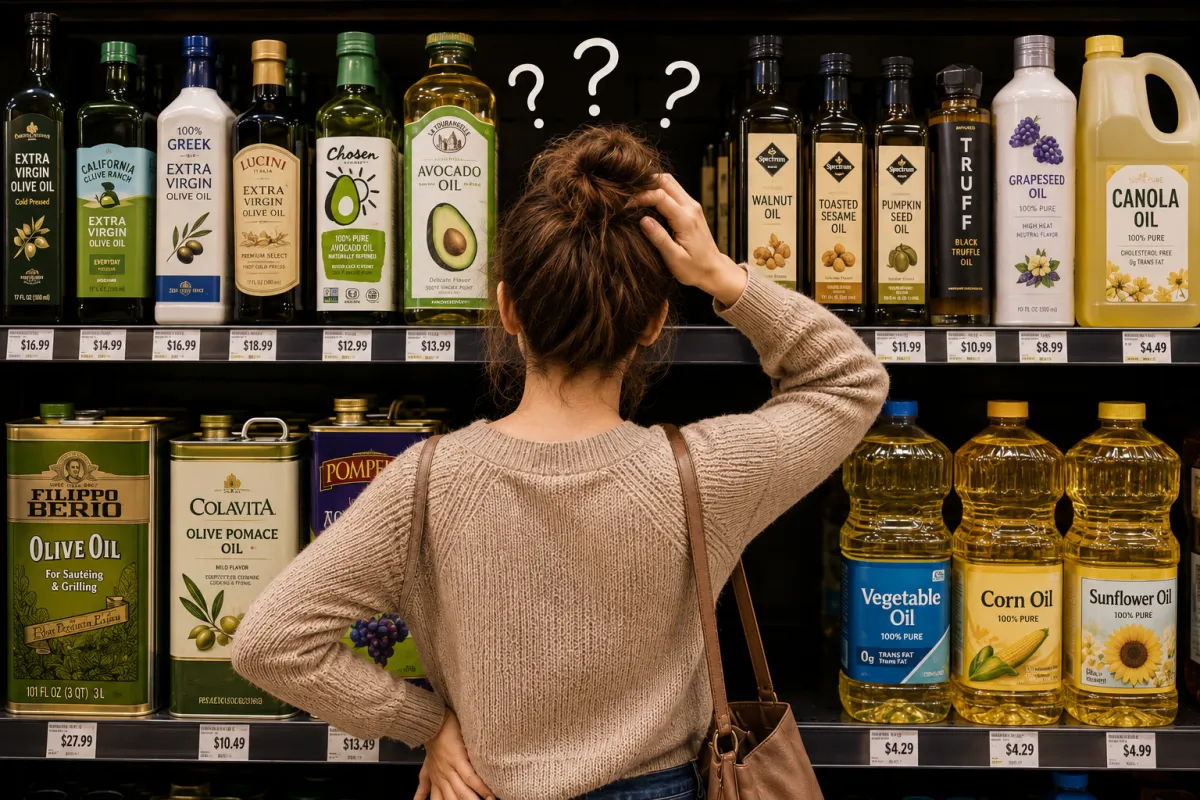
Walk through any grocery store today and you’ll see endless oil options:
olive oil, avocado oil, canola oil, coconut oil, sesame oil, grapeseed oil…
And if you spend five minutes online, you’ll probably hear that one oil is a “superfood” while another is supposedly “toxic.”
No wonder people are confused.
The truth is, oils are not as simple—or as scary—as the internet sometimes makes them seem.
Different oils work better for different purposes. Some are better for high heat cooking. Some are better cold. Some are more processed. Some are richer in monounsaturated fats.
But the biggest factor most people overlook?
Quantity.
Because even healthy oils are still calorie-dense.
That doesn’t mean oils are bad. In fact, healthy fats are important for:
satiety
hormone production
absorption of vitamins A, D, E, and K
brain health
creating satisfying meals
The goal is not to fear oils.
The goal is to learn how to use them intentionally.
Fat is not the enemy
In fact, many women trying to lose weight become TOO restrictive with fats, which can backfire by increasing:
hunger
cravings
food obsession
fatigue
unsustainable eating patterns
Healthy fats help meals feel satisfying. And satisfied people tend to make more intentional food decisions than constantly hungry people.
So Why Is Everyone So Confused About Oils?
Because if the internet is to be believed, every oil is either:
a miracle,
poison,
or somehow personally attacking your hormones.
Relax.
Here’s the simple version.
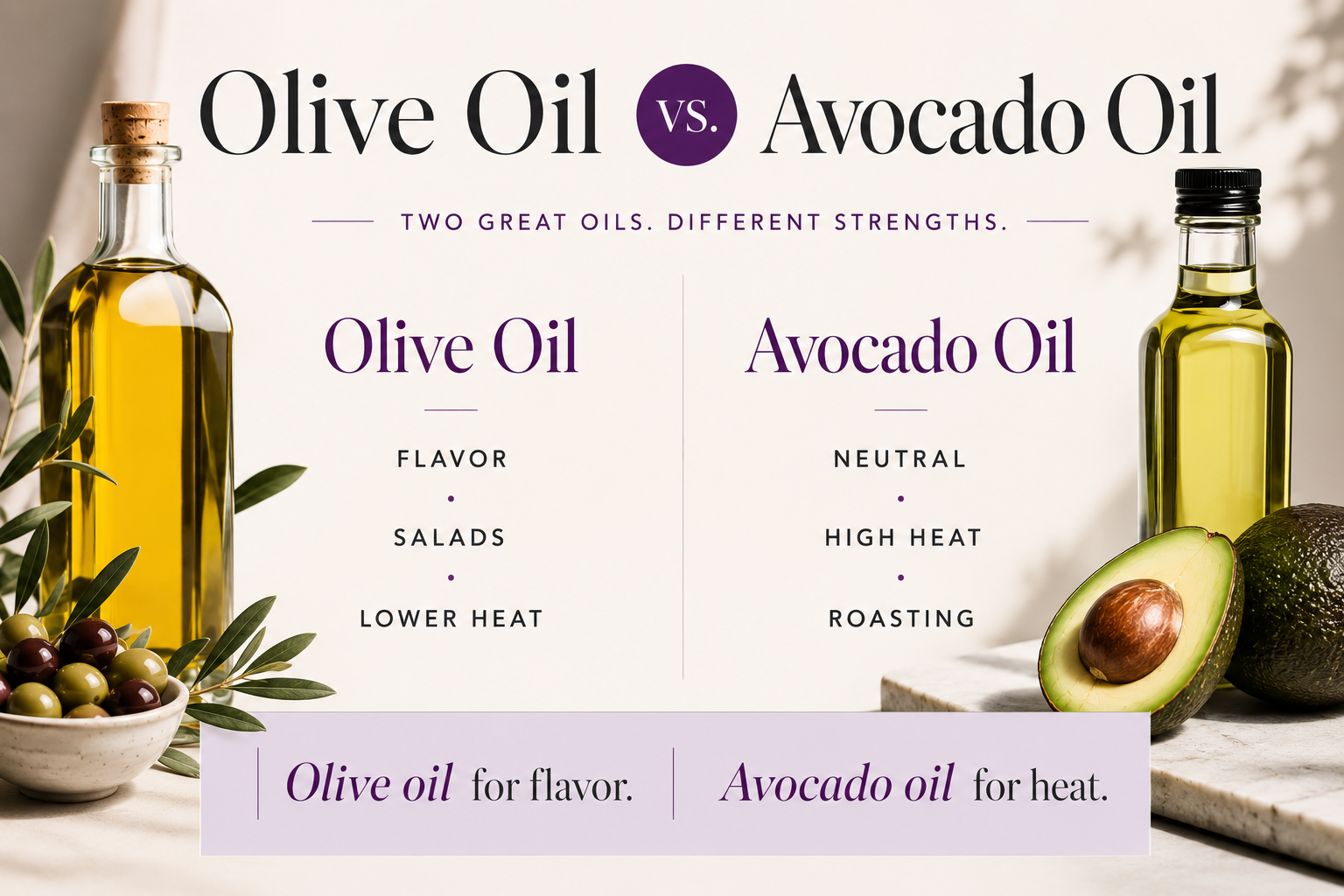
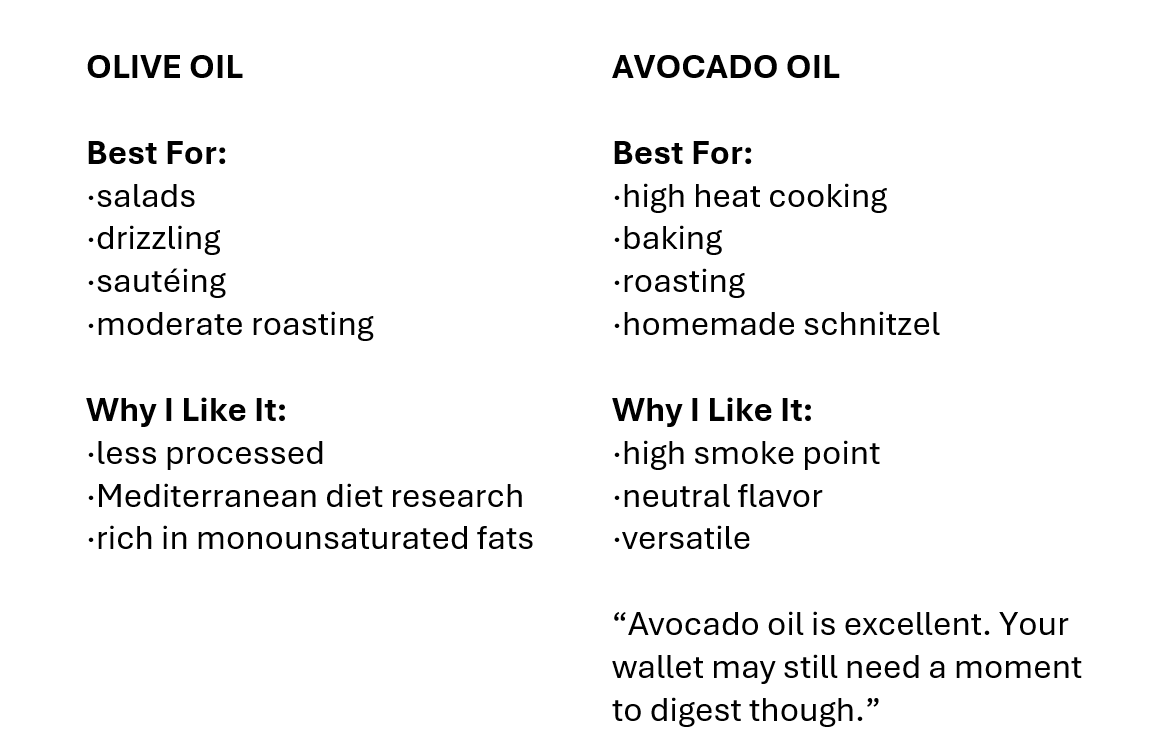
MY TOP 2 EVERYDAY OILS
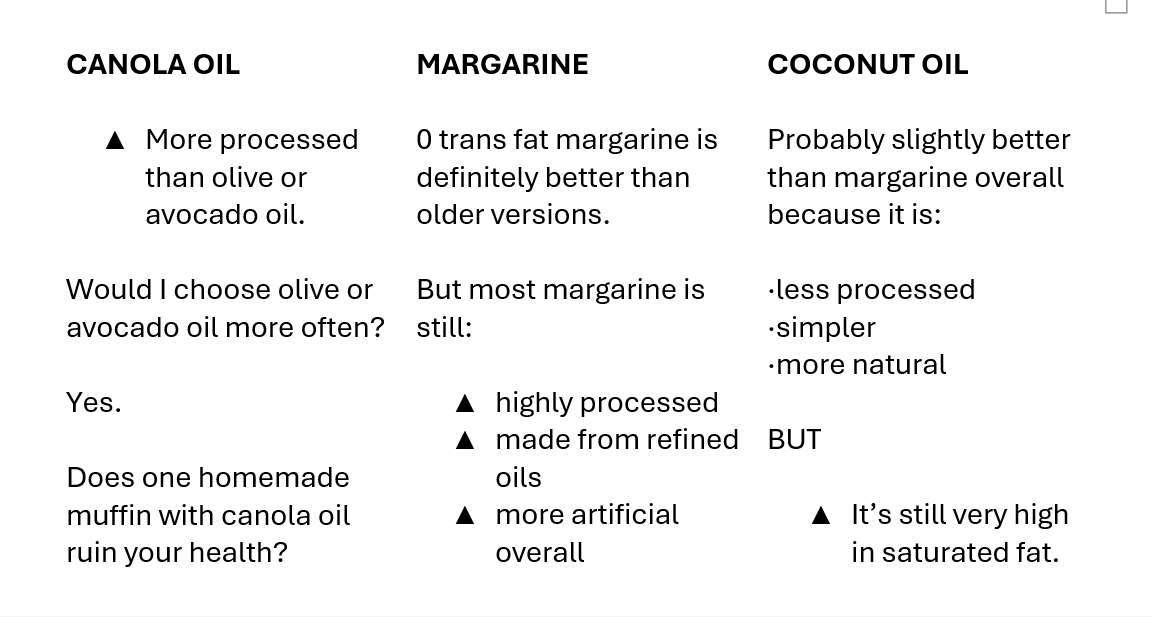
CANOLA, MARGARINE & COCONUT OIL
“Nutrition does not need a 14-part documentary series. Stop overthinking and keep things simple.”
The issue is usually not occasional home cooking. The bigger concern is repeatedly overheated oils, heavily processed fried foods, and overall dietary patterns.
WHERE DOES MAYO FIT IN
Mayonnaise is basically:
·oil ·egg ·seasoning
Most traditional mayo is made from:
·canola oil ·soybean oil ·blended vegetable oils
There are now also:
·avocado oil mayo ·olive oil mayo
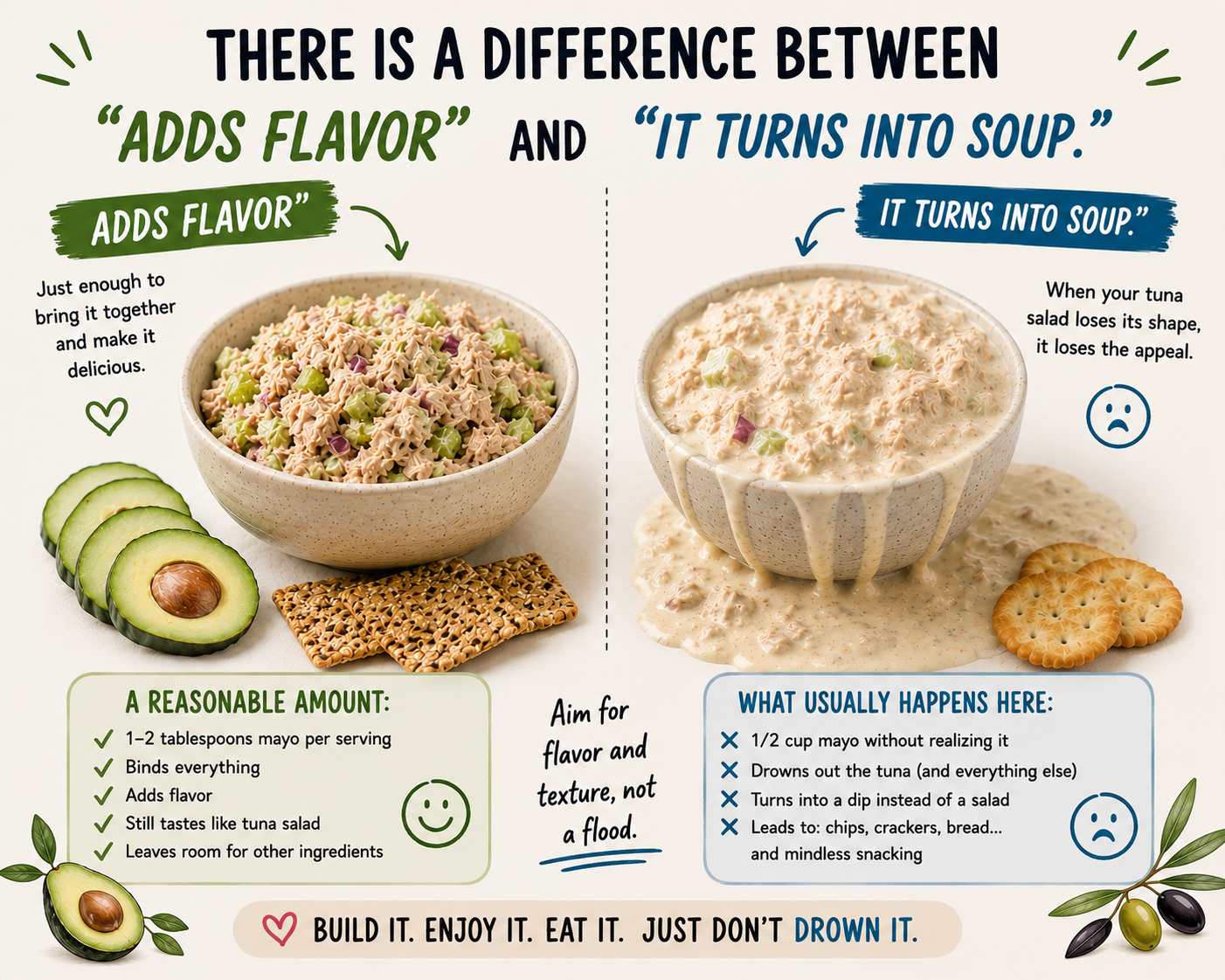
Mayo is not automatically “bad.”
The issue is usually not one tablespoon.
The issue is when the tuna salad sounds wet and the dip becomes “mayo with emotional support vegetables”
Healthy eating becomes confusing when we turn individual foods into villains instead of looking at the overall pattern.
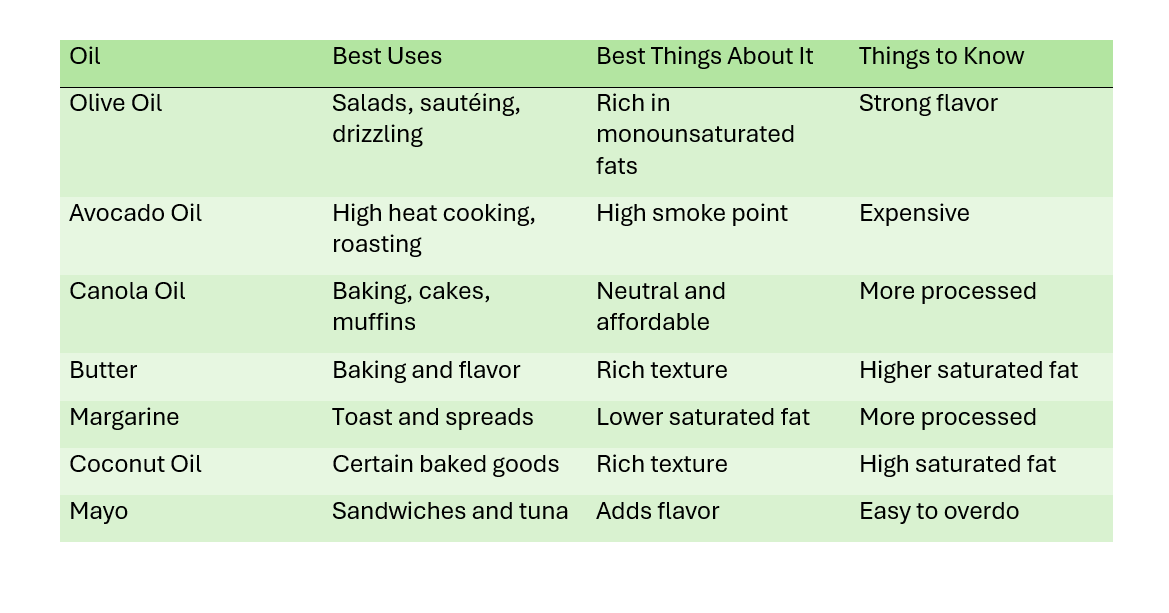
QUICK OIL CHEAT SHEET
Specialty Oils? (It's never ending)
Specialty oils like:
sesame oil
black truffle oil
walnut oil
chili oil
are usually more about flavor than health magic.
Think of them like:
finishing touches.
A little sesame oil can completely transform a stir fry.
A tiny drizzle of truffle oil can make vegetables or potatoes feel restaurant-level fancy.
But these oils are not meant to become your main everyday cooking oils.
They are:
stronger in flavor
usually used in small amounts
more for taste than nutrition optimization
So enjoy them when they add something special.
What About Low-Fat Dressing?
Honestly? Sometimes practical nutrition wins.
If 2 tablespoons of low-fat dressing helps someone eat a huge salad consistently instead of forcing themselves to chew dry lettuce in sadness, that may actually SUPPORT weight loss.
The “perfect” food plan that nobody can sustain is usually less effective than the realistic one someone can actually live with.
Is Home Frying Ever An Option?
Making homemade schnitzel does not automatically destroy your health.
There is a BIG difference between:
occasional homemade frying
andheavily processed fast food eaten daily.
At home, you control:
the oil
the freshness
the amount
the cooking temperature
That matters.
If your oil is aggressively smoking and your smoke detector is participating in dinner, the oil is probably too hot.
One Important Reminder
Healthy oils are still calorie-dense.
Just one tablespoon contains about:
120 calories per tablespoon of oil
That does NOT mean oils are bad.
It just means:
free-pouring olive oil all over the salad may not help your weight loss goals.
The healthiest diet is not the most extreme one.
It’s the one you can maintain consistently while feeling:
·satisfied
·balanced
·in control around food
And for most people?
Using mostly olive oil and avocado oil while limiting heavily processed fried foods is a very reasonable place to start.
Want realistic nutrition guidance without the overwhelm?
Learn more about the It’s About Time Program at: oneononehealth.us
