
How to Control Hunger Without Ozempic or GLP-1 Medications
GLP-1 medications changed the weight-loss conversation.
For the first time, millions of people experienced something new — not just weight loss, but relief from constant hunger.
Less food noise.
Less urgency.
Less constant mental negotiation.
Medications such as semaglutide (Ozempic®, Wegovy®) and tirzepatide (Mounjaro®, Zepbound®) brought appetite regulation to the forefront of modern weight-loss treatment.
And that revealed something important.
Weight loss isn’t just about metabolism.
It isn’t just about calories.
It’s about appetite.
For decades, people were told that if they simply ate less and moved more, they would succeed. But GLP-1 medications exposed the flaw in that logic. When hunger is biologically reduced, eating less becomes easier. Not because someone suddenly developed better discipline — but because their appetite changed.
That shift matters.
Because it proves something powerful:
Appetite drives intake.
Intake drives weight.
But here’s the part that often gets lost in the excitement.
You don’t have to rely exclusively on medication to improve hunger control.
GLP-1 medications work pharmacologically. They amplify fullness signals and slow digestion. But appetite is influenced by more than one pathway. It is affected by timing, meal composition, blood sugar stability, sleep, stress, and behavioral patterns.
In other words, hunger is biological — but biology responds to how and when we eat.
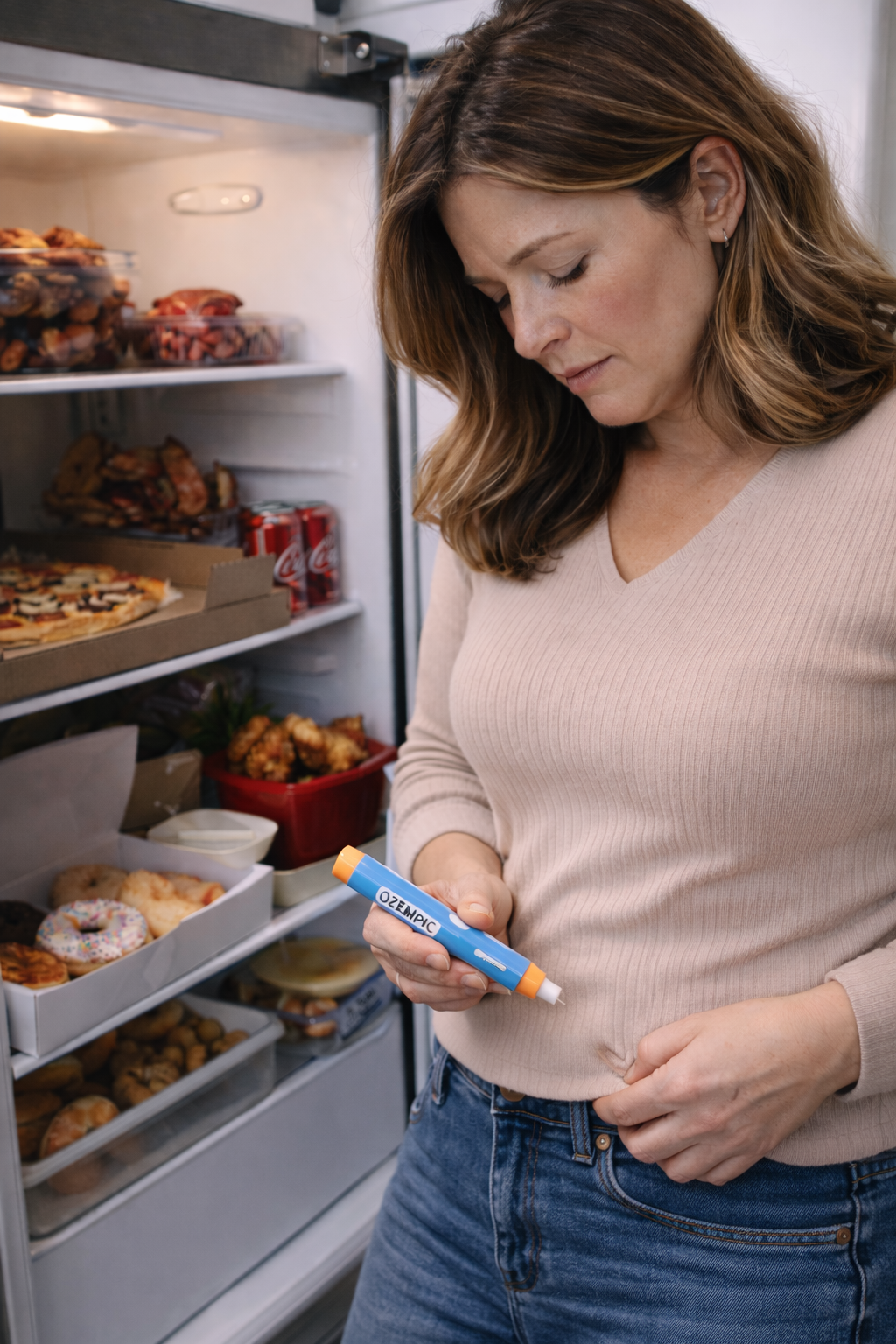
What GLP-1 Medications Do
GLP-1 medications:
• Slow gastric emptying
• Increase feelings of fullness
• Reduce appetite signaling
• Decrease “food noise”
In short, they prevent hunger from escalating.
And escalation is the real problem.
Most overeating doesn’t happen when hunger is moderate.
It happens when hunger becomes urgent.
Can You Control Hunger Without Ozempic?
Many people now ask whether it’s possible to control hunger without Ozempic or similar GLP-1 medications.
The answer is yes — but not by ignoring appetite.
While medications suppress hunger pharmacologically, appetite can also be stabilized behaviorally.
You may not be able to eliminate hunger entirely without medication. But you can dramatically stabilize it. You can reduce spikes. You can prevent escalation. You can lower the intensity of cravings before they take over your decisions. When hunger is biologically reduced, eating less becomes easier — not because your discipline improves, but because your appetite changes
That insight matters.
But here’s the part that often gets overlooked.
You can influence hunger control without Ozempic or other GLP-1 medications — if you understand how appetite actually works.
The goal is not zero hunger.
The goal is manageable hunger.
And manageable hunger changes everything.

Hunger Is Not a Discipline Problem
If you’re starving by mid-afternoon, it’s rarely a willpower issue. It’s often the result of delaying a meal — something we see frequently with intermittent fasting.
It’s often the result of:
• Postponing your meals
• Under-eating earlier
• Relying on caffeine
• Long gaps between meals
Hunger doesn’t disappear when ignored.
It builds.
And when it spikes, decision-making shifts. The brain prioritizes fast energy. Portions increase. Cravings intensify.
That’s biology — not failure.
How to Regulate Appetite Naturally
The goal isn’t to mute hunger.
The goal is to prevent escalation.
Here’s what works.
🕧 Eat Earlier Than You Think You Need To
Waiting until you are “really hungry” is often too late.
Eating earlier in the day helps:
• Stabilize blood sugar
• Moderate ghrelin release
• Reduce afternoon crashes
• Lower evening overeating
When hunger stays moderate, intake stays controlled.
Structured early meal timing can mimic part of what people appreciate about GLP-1 medications — steadier appetite — without injections.
🍽️ Build Meals That Actually Satisfy
Appetite regulation isn’t about eating “clean.”
It’s about eating enough of the right combination.
Balanced meals should include:
• Protein
• Fiber
• Fat
• Controlled carbohydrates
Protein and fat increase satiety hormones.
Fiber adds volume and slows digestion.
And carbohydrates — when used wisely — enhance satisfaction.
🚨 Avoid Hunger Escalation Windows
Long gaps between meals create:
• Blood sugar dips
• Energy crashes
• Intensified cravings
• Reactive eating
Consistency prevents spikes.
GLP-1 medications blunt escalation pharmacologically.
Meal timing prevents escalation behaviorally.
Both address the same mechanism: hunger intensity.

The Real Goal
The goal isn’t zero hunger.
The goal is stable hunger.
When appetite is steady:
• Portions are easier to manage
• Cravings feel less urgent
• Decisions feel clearer
• Calorie intake becomes more predictable
You don’t need to eliminate appetite.
You need to regulate it.
The Bottom Line
GLP-1 medications highlighted something important:
Appetite drives weight.
But appetite is not only pharmaceutical.
It is biological — but it isn’t fixed. It responds to behavior, and our daily habits influence how intense it becomes.
Suppressing hunger postpones the problem.
Regulating hunger — before it escalates — is the core of the It’s About TIME™ approach to effective weight loss.
And when hunger is steady, weight loss becomes sustainable — with or without medication.
