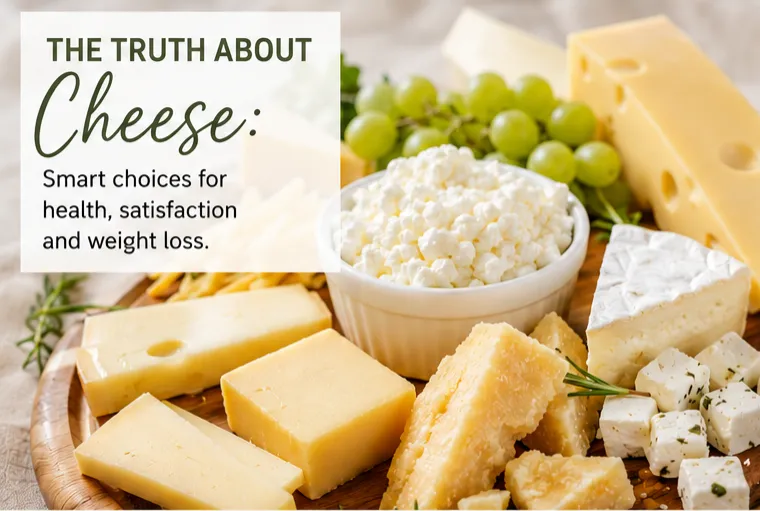
The Truth About Cheese: Is It Healthy, Fattening, or Actually Helpful for Weight Loss?
Cheese has become one of the most confusing foods in nutrition.
One minute it’s blamed for weight gain, inflammation, and high cholesterol.
The next minute people are putting extra cheese on everything because it’s “keto.”
So what’s the truth?
Like most foods, cheese is not simply “good” or “bad.” The real question is:
Which cheese? How much? And what role is it playing in your overall eating pattern?
I often tell clients that cheese can either:
help stabilize hunger and satisfaction
orquietly add hundreds of calories without fullness.
The difference usually comes down to type, portion, and awareness.
Why Cheese Can Actually Help With Weight Loss
Many women are surprised to hear this, but cheese can sometimes SUPPORT weight loss when used correctly.
Why?
Because cheese contains:
·protein
·fat
·flavor
·satisfaction
And satisfaction matters.
One of the biggest reasons people overeat is because their meals earlier were not tasty or satisfying enough. A small amount of cheese can make a meal feel complete and reduce the urge to keep picking and grazing afterward.
The problem is not usually the cheese itself.
The problem is:
·mindless portions
·constant nibbling
·shredded cheese “sprinkled” onto everything
·cheese combined with refined carbs in oversized portions
A measured amount of cheese at a meal is very different from unconsciously eating handfuls while cooking dinner.
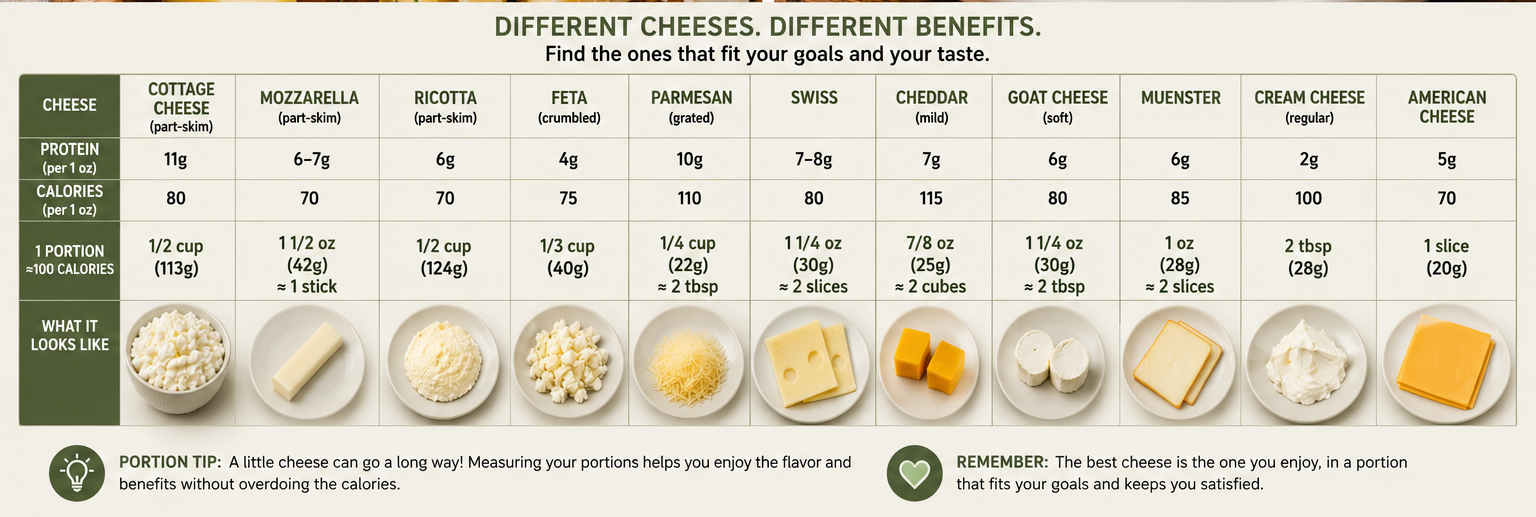
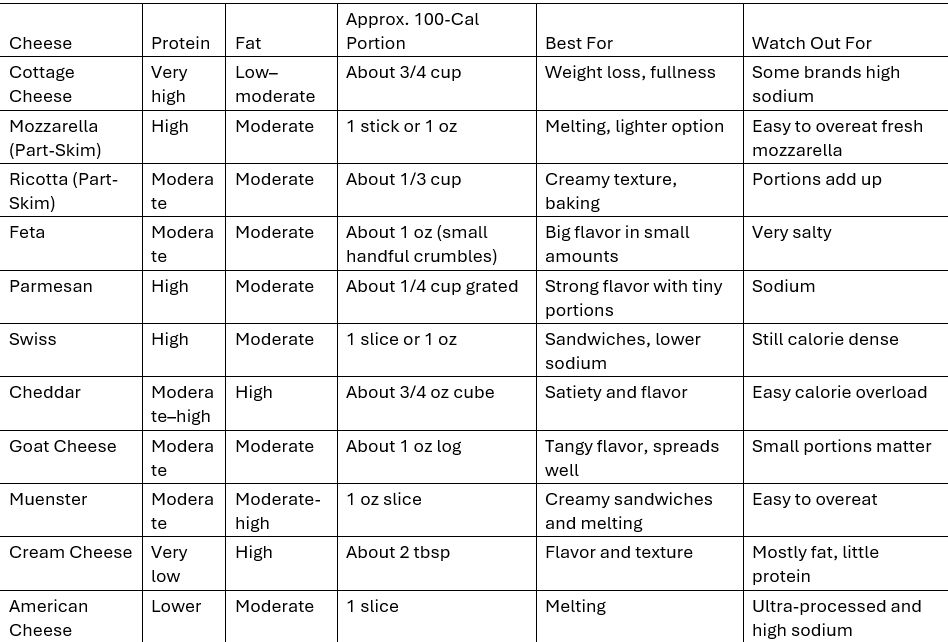
Cheese Comparison Chart
Is American Cheese Really “Bad”?
American cheese gets criticized because it is highly processed and often contains:
·emulsifiers
·preservatives
·added oils
·artificial coloring
It is also usually lower in protein than natural cheeses.
But that does not mean one slice will harm your health.
In reality, the bigger nutritional issue for most people is not a slice of American cheese on a sandwich. It is the overall pattern of:
·overeating ultra-processed foods
·eating reactively
·constant snacking
·lack of meal structure
If someone enjoys American cheese occasionally, that is not the reason they are struggling with weight.
The Best Cheeses for Weight Loss
If your goal is fullness and appetite control, the best options are usually:
Cottage Cheese
Very high protein for relatively few calories. Extremely filling.
Mozzarella
Especially part-skim mozzarella or light string cheese. Good protein-to-calorie ratio.
Swiss
Higher protein and often lower sodium than many cheeses.
Parmesan
Very flavorful, which means a little goes a long way.
Full Fat vs Low Fat Cheese
This surprises many people:
Lower fat is not automatically better.
A moderate amount of fat helps:
·satisfaction
·fullness
·hormone support
·flavor
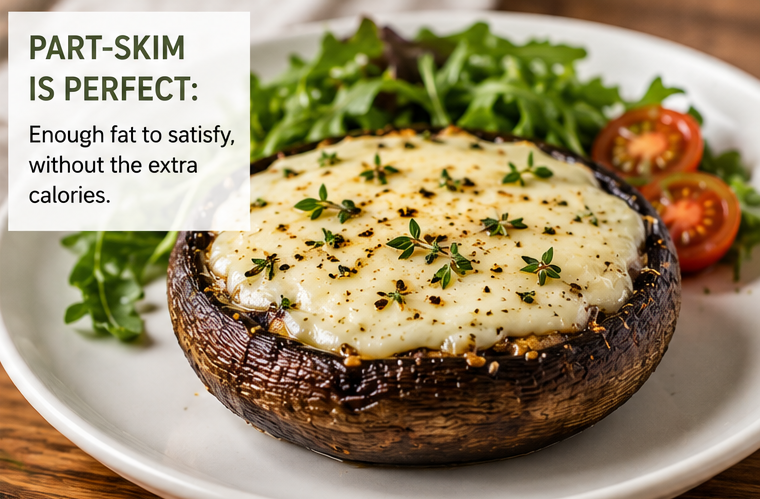
That said, in my practice, I often prefer part-skim cheeses for weight loss.
Why?
Because part-skim cheeses usually still provide enough fat to create satisfaction and fullness — without the calories climbing quite as quickly as full-fat versions.
For many women, part-skim options create a very balanced middle ground:
·enough richness to feel satisfied
·enough protein to stabilize hunger
·but easier calorie control overall
Examples include:
·part-skim mozzarella
·light string cheese
·reduced-fat cottage cheese
·lower-fat ricotta
When foods become too low-fat, people often compensate by:
·eating larger portions
·snacking more later
·feeling less satisfied
But very high-fat cheeses can also become extremely calorie dense very quickly.
The goal is not “fat free.”
And the goal is also not “unlimited cheese because it’s keto.”
The goal is: 1 serving of fat to satisfy you without turning a meal into a calorie overload.
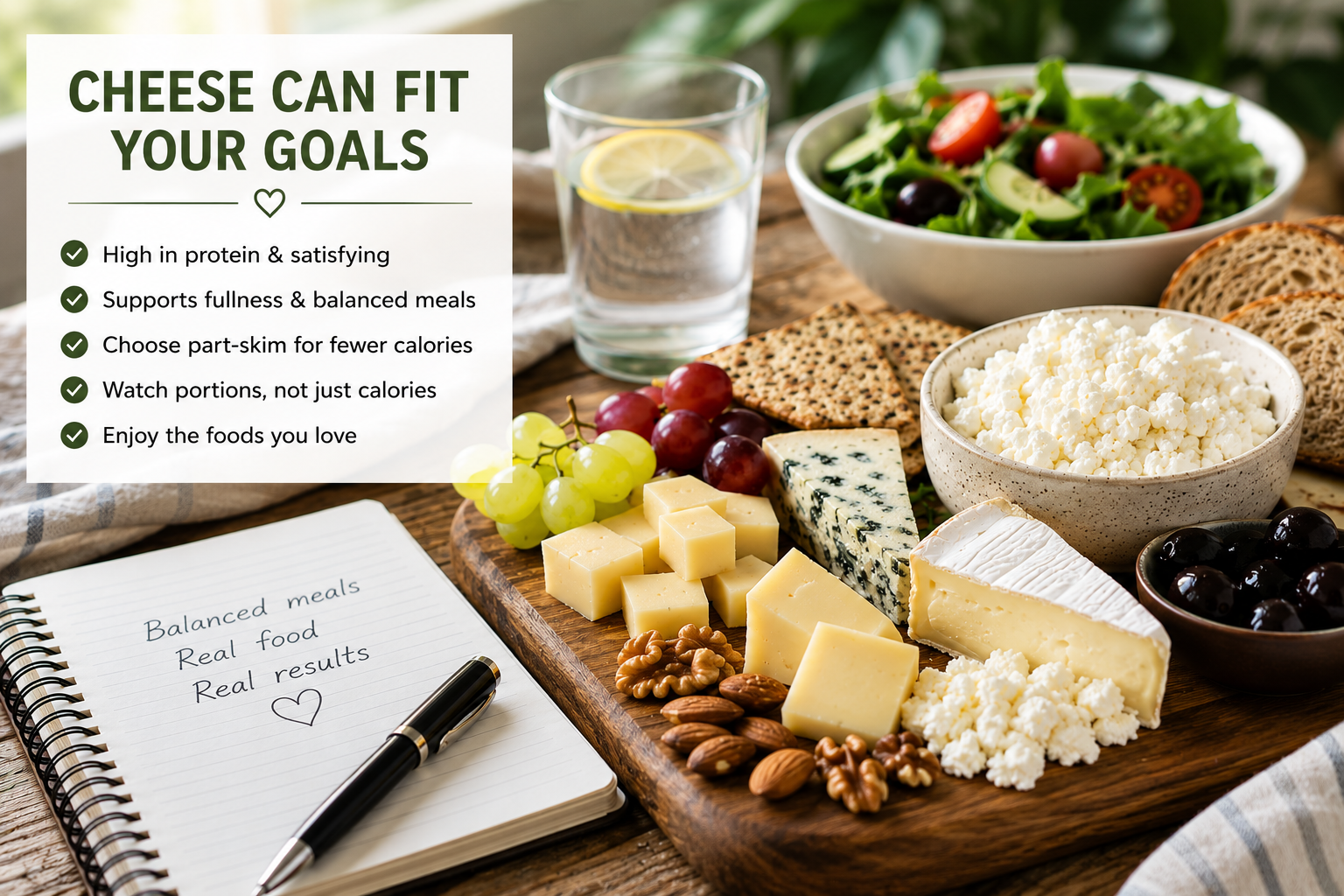
Cheese and Hormones
Many women worry that cheese or dairy automatically causes:
·inflammation
·hormone imbalance
·weight gain
For most people, moderate dairy intake is completely fine.
In fact, dairy protein can be very filling and supportive for appetite control.
The women who tend to struggle most are usually not struggling because of one serving of cheese.
They are struggling because:
·meals are inconsistent
·hunger becomes extreme later in the day
·eating becomes reactive instead of intentional
A Practical Portion Guide
For most women actively trying to lose weight, a realistic serving is often:
·1 oz hard cheese
·1 light mozzarella stick
·½ cup cottage cheese
·1–2 tablespoons grated parmesan
·1 measured slice deli cheese
This allows cheese to improve satisfaction without silently doubling the calories of the meal.
Final Thoughts
Cheese is not the enemy.
In many cases, it can actually HELP reduce overeating by making meals more satisfying and stable.
Because sustainable weight loss is not about removing every enjoyable food.
It’s about creating a way of eating that keeps hunger manageable enough that you can actually maintain it long term.
